News

Integrated Mineral Supply

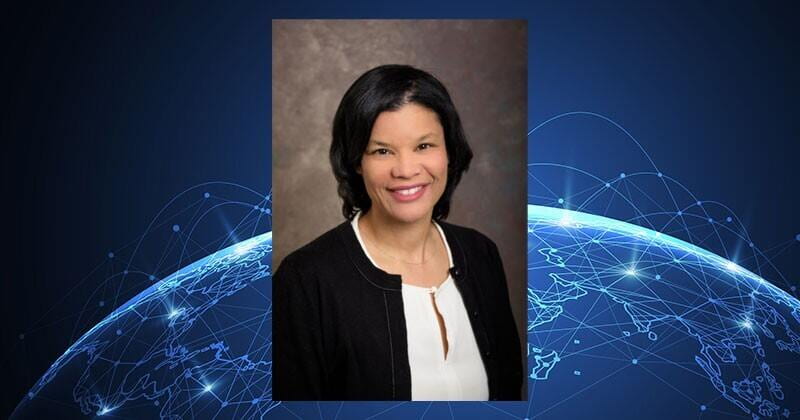
Saleem Ali, the Blue and Gold Distinguished Professor of Energy and the Environment at UD, chair of the Department of Geography and Spatial Sciences and DSI Affiliated Faculty member, is the lead author of a new study that suggests the need for an international minerals agreement to ensure countries can produce the green technologies necessary to battle climate change.
Read More

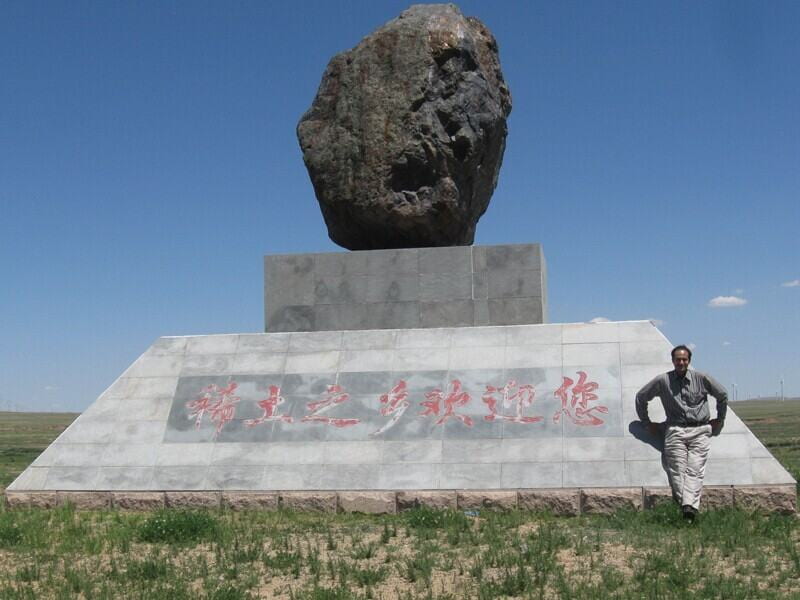
Saleem Ali, the Blue and Gold Distinguished Professor of Energy and the Environment at UD and chair of the Department of Geography and Spatial Sciences, is the lead author of a new study that suggests the need for an international minerals agreement to ensure countries can produce the green technologies necessary to battle climate change. In this photo, Ali is pictured in the Bayan Obo mining region within the Inner Mongolia region of China in 2017 in front of a massive ore nugget of rare earth minerals which is being celebrated here with the following words: "Welcome to the Rare Earths Community.” Photo courtesy of Saleem Ali

Working with Nature

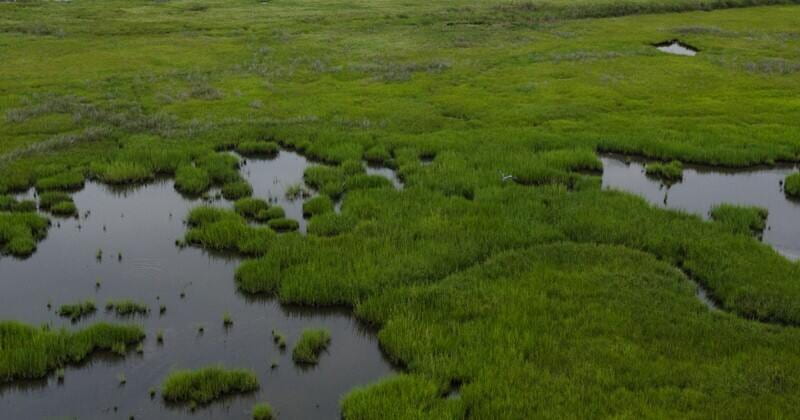
The Delaware Estuary is losing about an acre per day of tidal wetlands, a problem that could worsen as sea level rise accelerates and land development intensifies along coastlines, causing what’s known as “coastal squeeze.” An interdisciplinary team of researchers including DSI Affiliated Faculty Yao Hu, Assistant Professor of Geography and Spatial Sciences are exploring ways to protect coastal shorelines naturally.
The Delaware Estuary is losing about an acre per day of tidal wetlands, a problem that could worsen as sea level rise accelerates and land development intensifies along coastlines, causing what’s known as “coastal squeeze.” Photo courtesy of Danielle Quigley

Computational Foundations

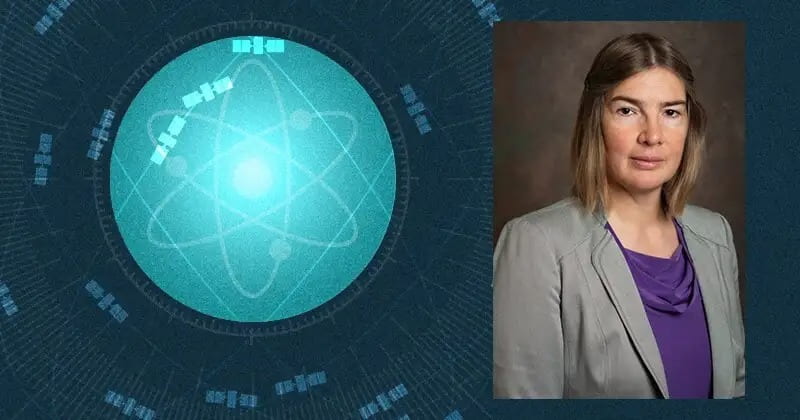
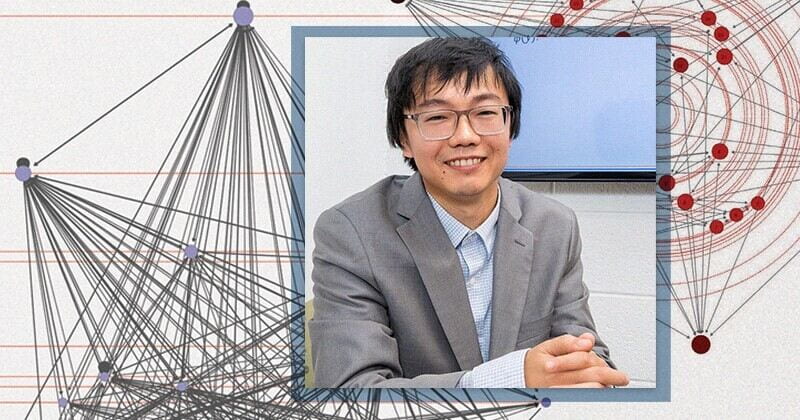
Guangmo (Amo) Tong, Assistant Professor in the CIS department and DSI affiliated faculty member, receives NSF CAREER award for computer science research
Read More

Guangmo (Amo) Tong, assistant professor in UD’s College of Engineering, is using fundamental computer science research toward improving data-driven decision making. Through a better understanding of the theories that underlie algorithmic decision-making, Tong’s research can support future breakthroughs across a wide range of applications. Photo by Kathy F. Atkinson | Illustrations by Joy Smoker

Improving Kenya’s crop yield

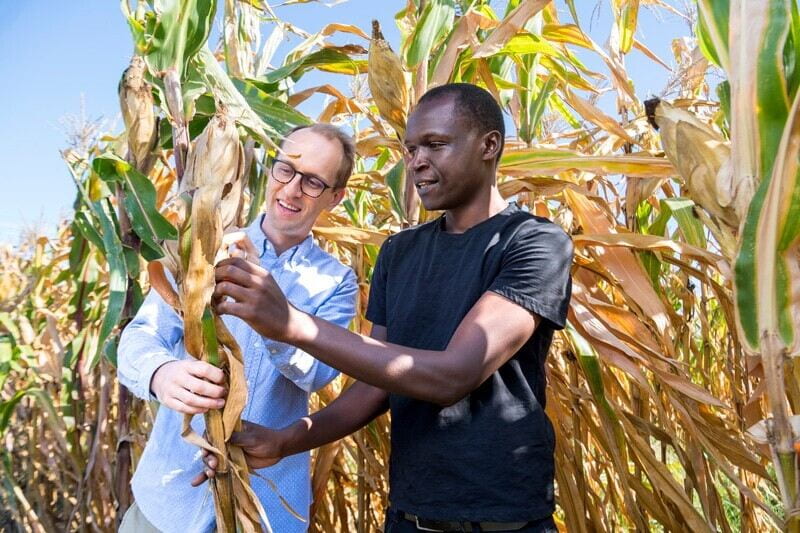
A new paper from UD researchers used statistical approaches to examine rainfed corn in Kenya, a country with widespread corn cultivation and consumption and where the crop is central to individual’s livelihoods and national food security. The paper was authored by Kevin Ong’are Oluoch, a doctoral student in the College of Earth, Ocean and Environment with his adviser, Kyle Davis, a DSI resident faculty member.
Read More

A new paper from University of Delaware researchers Kevin Ong’are Oluoch (right), a doctoral student in the College of Earth, Ocean and Environment, and assistant professor Kyle Davis (left) used statistical approaches to examine rain-fed corn in Kenya, a country with widespread corn cultivation and consumption and where the crop is central to individual livelihoods and national food security. Photo by Kathy F. Atkinson

Missing WWII aircraft found

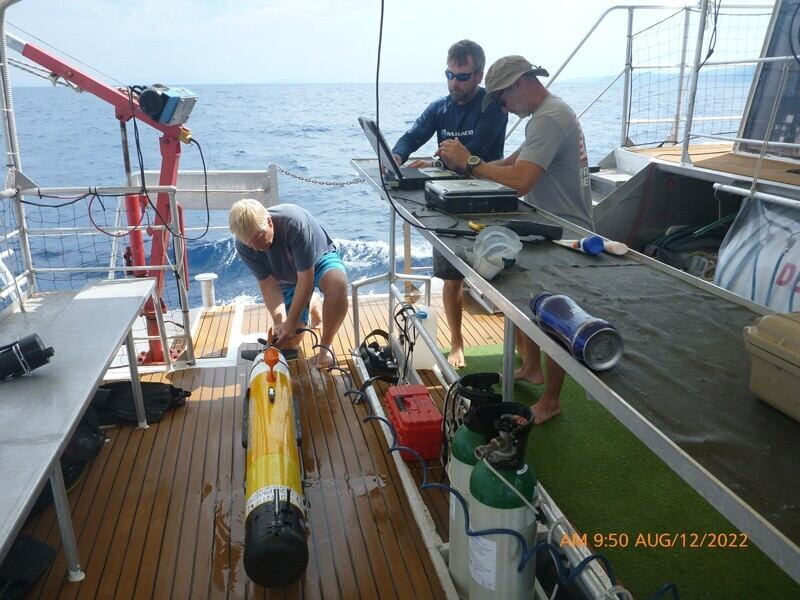
A team from UD lead by Mark Moline, Harrington Professor of Marine Studies in UD’s School of Marine Science and Policy, and DSI Affiliated Faculty recently located the wrecks of missing missing WWII aircraft in the Adriatic Sea. Moline is co-founder of Project Recover, an organization that uses underwater technologies to help locate and repatriate the more than 80,000 U.S. service members still missing from past conflicts since WWII.
Read More

University of Delaware’s Mark Moline (left), professor of marine studies, rinses the AUV after its survey in Croatia while Matthew Breece, research scientist, and Erik White, senior engineer, download and analyze the data. Photos courtesy of Evan Kovacs and Elizabeth Snyder

Beyond the Speed of Sound

Hypersonic travel is in the future, but first researchers must solve some key problems including managing how hot vehicles get at high speeds, as well as how to maintain flight stability. UD Associate Professor Joseph Kuehl from the Department of Mechanical Engineering and DSI Associate Faculty is working with another researcher at the University of Notre Dame to try to solve these key challenges.

Read More

Hypersonic travel is in the future, but first researchers must solve some key problems including managing how hot vehicles get at high speeds, as well as how to maintain flight stability. One University of Delaware researcher is working with another at the University of Notre Dame to try to solve these key challenges. Illustration by Joy Smoker.

A Pioneer in Polymer Physics

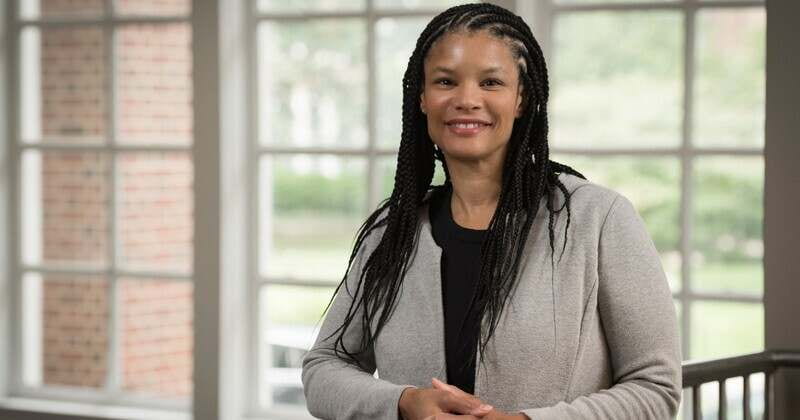
UD College of Engineering Distinguished Professor and DSI Affiliated Faculty LaShanda Korley has been elected as a 2022 Fellow of the American Physical Society (APS) “for innovative bio-inspired strategies to control architecture, assembly, and mechanics of soft material systems.”
Read More

UD Engineering Prof. LaShanda Korley is recognized among her peers for her research achievements in bio-inspired and sustainable materials. Photo by Kathy F. Atkinson

Harnessing the power of the world’s fastest computer

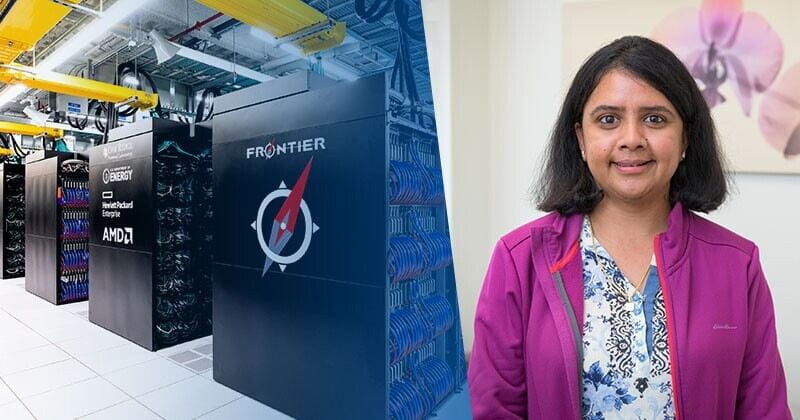
UD’s Sunita Chandrasekaran, David L. and Beverly J.C. Mills Career Development Chair in the Department of Computer and Information Sciences and new DSI Faculty Council member, and her students have been working to ensure that key software will be ready to run on Frontier — the fastest computer in the world — when it “opens for business” to the scientific community in 2023.
Read More

UD’s Sunita Chandrasekaran, David L. and Beverly J.C. Mills Career Development Chair in the Department of Computer and Information Sciences, and her students have been working to ensure that key software will be ready to run on Frontier — the fastest computer in the world — when it “opens for business” to the scientific community in 2023. Photos by Evan Krape and courtesy of the U.S. Department of Energy

Discovering a Shipwreck

Coastal Sediments, Hydrodynamics, and Engineering Laboratory (CSHEL) at UD lead by director Art Trembanis, professor in the School of Marine Science and Policy and DSI affiliated faculty, held a summer “boot camp” for marine archeologists to explore Sackets Harbor on Lake Ontario, an area with sites of known shipwrecks. The boot camp let the participants brush up on skills, learn some new ones, and get hands-on experience with UD’s fleet of underwater robots and surveying equipment in the field. As it turned out, it was also a great opportunity for students to make a new shipwreck discovery of their own.

Read More

Master’s student Grant Otto (left) helps orient the AUV away from the boat while master’s student Sun Woo Park initiates the mission go command from the remote control. The Iver3 AUV is setting off to map lakebed anomalies off the War of 1812 battlefield site. Photo courtesy of Art Trembanis.

Our Mission

The Institute aims to accelerate research in data science, serving as a nucleating effort to catalyze interdisciplinary research collaborations across fields impacting our society.